Verified guide
China 240-Hour Visa-Free Transit Guide
A practical, non-legal checklist for eligible travelers planning up to 10 days under China's 240-hour visa-free transit policy through 65 designated ports.
Treat this as a planning checklist, not legal advice
Transit rules can change and depend on nationality, port of entry, onward ticket, travel area, and document history. Always confirm with official sources, your airline, and the relevant consulate before relying on visa-free transit.
What changed
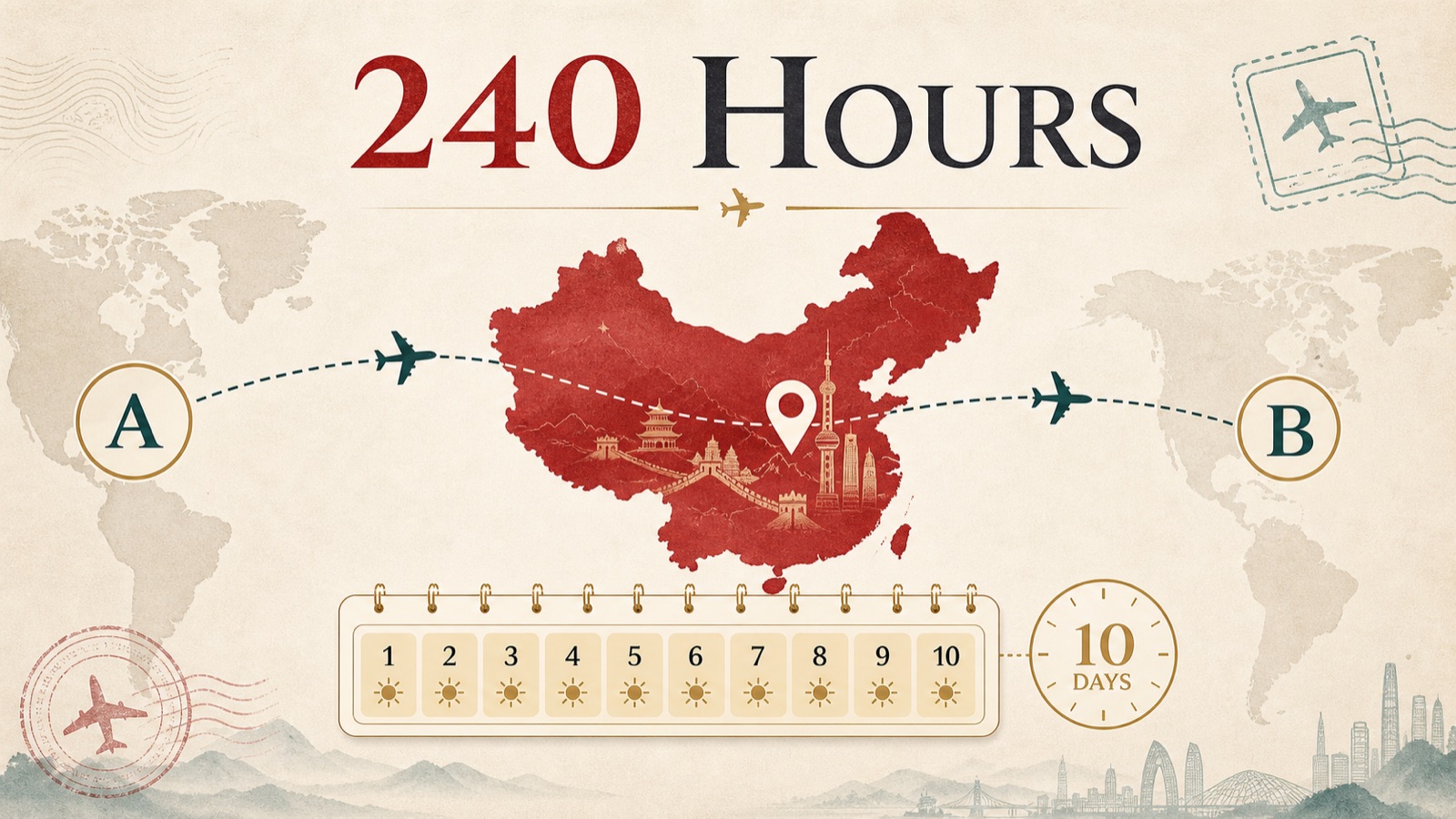
The National Immigration Administration currently describes the policy as a stay of no more than 240 hours, or 10 days, for nationals of 55 eligible countries who transit through China to a third country or region. Eligible travelers may enter through 65 designated open ports in 24 provincial-level areas and must stay within the permitted areas.
- Do not assume every traveler, port, or route qualifies just because the stay is under 10 days.
- Check the latest official port list and allowed travel areas before booking.
- Keep the official notice available for airline check-in questions.
The basic eligibility questions
Before building an itinerary, check whether your passport, arrival port, onward destination, and travel area fit the policy.
- Is your nationality eligible for the current policy?
- Are you entering and leaving through eligible ports?
- Is your onward trip to a third country or region?
- Will your city-to-city route stay inside the allowed area?
- Do you have enough document validity and confirmed tickets?
Good itinerary shapes
The safest planning pattern is a simple entry city, a clear onward destination outside mainland China, and a route that stays comfortably inside the permitted area. Use this page to prepare questions, then confirm the final route with official sources and your airline.
- Shanghai 240-hour route: Shanghai plus Suzhou or Hangzhou, if the official allowed-area rules fit your itinerary.
- Beijing 240-hour route: Beijing plus a Great Wall day, with no ambitious same-day arrival plan.
- Guangzhou or Shenzhen route: Pearl River Delta planning can be useful, but border and onward-destination details matter.
- Keep every hotel, train, and onward ticket aligned with the same passport details.
Documents to prepare
Most problems happen before sightseeing starts: airline staff, arrival counters, hotel check-in, or a route that is not clearly transit. Prepare documents for those moments.
- Passport with sufficient validity and blank pages.
- Confirmed onward ticket to a third country or region.
- Hotel booking and address in Chinese.
- A printed or offline copy of the official 240-hour transit notice.
- Contact details for your airline, hotel, and next destination.
Official source to check
The National Immigration Administration's current policy interpretation lists 55 eligible countries, 65 designated ports, 24 provincial-level areas, and the third-country-or-region transit condition. Its November 2025 announcement explains the expansion from 60 to 65 ports. Confirm the current port list, permitted stay area, document requirements, and carrier checks again close to departure.
- Use the linked NIA primary sources below; also confirm with the relevant embassy or consulate and your carrier before travel.
What paid users get
The ready-made Survival Pack includes a general reminder to verify entry permission and transit eligibility with current official sources and your carrier. It does not assess eligibility, flag a buyer's itinerary risks, or provide legal or immigration advice.
Primary sources
Verify current policy before booking
Next step
Turn this guide into a city-specific plan.
Start with your landing city, then preview a free itinerary. The paid pack adds payment, arrival, transport, phrase, and printable offline checklists. It is not a personalized itinerary.
Build my China arrival planSee the $9.90 Survival Pack